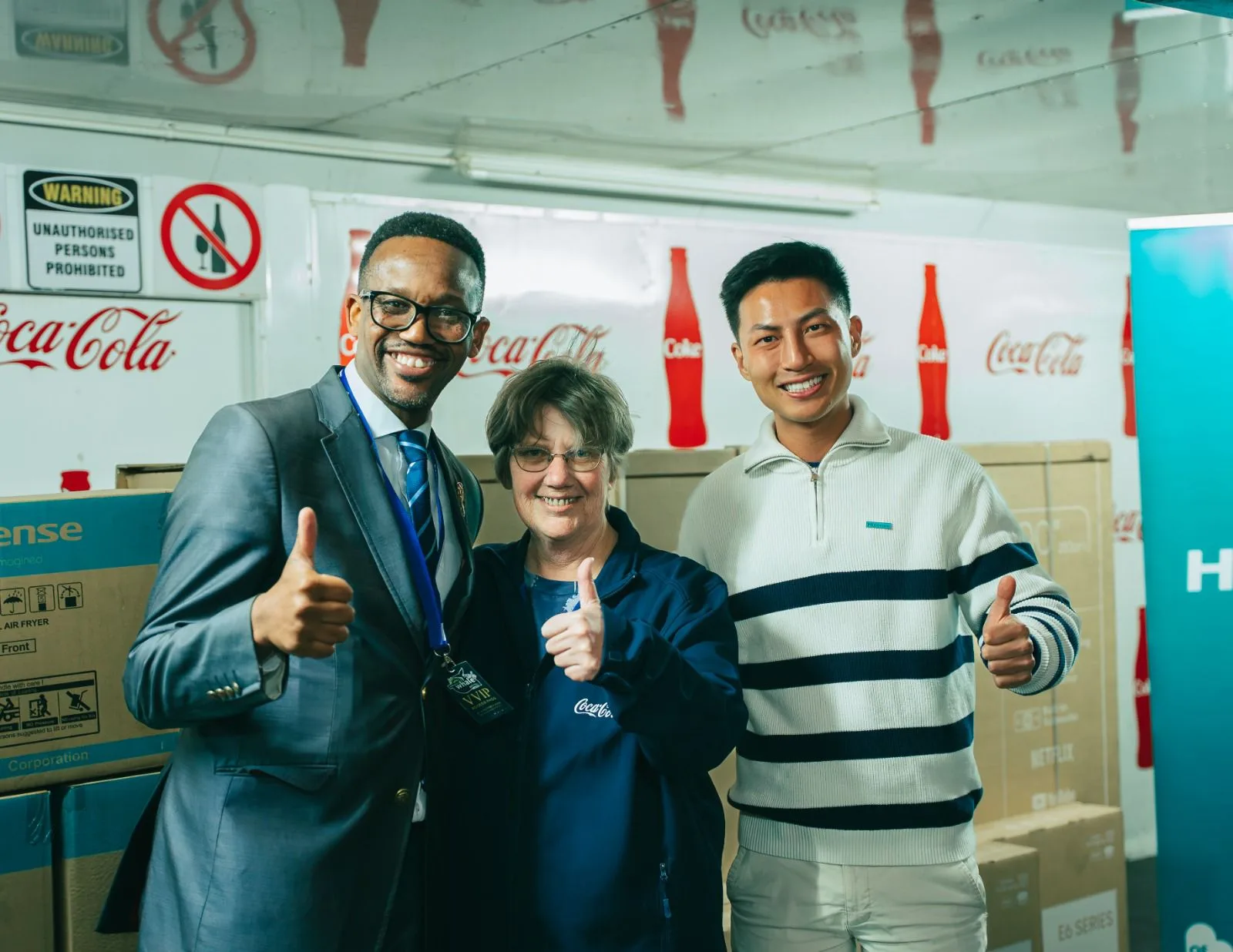
From performative to structural: how Hisense SA is redefining corporate responsibility as the architecture of national sovereignty
In 2026, CSR must move beyond periodic charity. It has become the primary engine of industrial resilience, economic dignity, and the long-term sovereignty of the South African economy.
Cape Town, South Africa – There is a quiet revolution underway in the South African boardroom. For the better part of three decades, Corporate Social Responsibility in this country was often a predictable, albeit well-intentioned, ritual. It meant a percentage of profits redirected toward community projects, a ribbon cut at a school library, or a seasonal donation. It was the era of passive philanthropy.
That era is giving way to something far more profound.
In its place, a more sophisticated and consequential model is emerging. This is a model that Hisense South Africa is not merely observing, but actively architecting. The company today formally articulates a philosophy it terms “Active Integration”: the deliberate embedding of social and economic value creation into the core industrial and commercial operations of a business, rather than treating it as a philanthropic afterthought. In the context of South Africa’s structural unemployment, its urgent need for industrial sovereignty, and the global imperative for environmental stewardship, Hisense argues that this is not simply the right thing to do. It’s the only viable strategy for any corporation that intends to remain relevant in the next decade.
From Performative Donation to Socio-Economic Architecture
The evolution of CSR in South Africa has been neither linear nor swift. For years, the dominant paradigm was what analysts now describe as “cheque-book charity”. This was a transactional model in which corporations discharged their social obligations through financial transfers to non-governmental organisations, with limited accountability for outcomes and even less integration with core business strategy.
The limitations of this model have been evident for some time. Investors deploying trillions in ESG-mandated capital now demand measurable impact, not narrative. Regulatory frameworks, including South Africa’s mandatory ESG disclosure requirements effective from the 2025–26 financial year, are recasting transparency from a virtue into a legal obligation. At the same time, a new generation of South African consumers, particularly millennials and Gen Z, are making their purchase decisions grounded in authentic corporate purpose rather than philanthropic positioning.
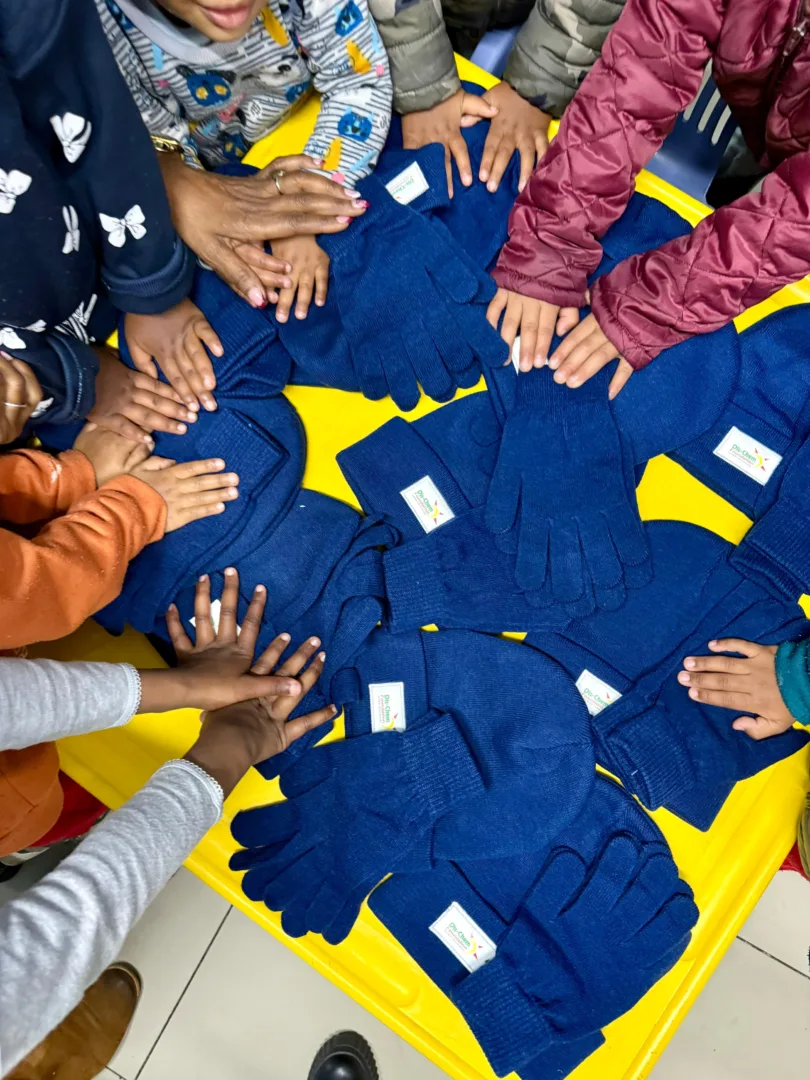
It’s against this backdrop that the work of institutions such as the Dis-Chem Foundation (a partner of Hisense SA) has taken on a new significance. Founded in 2006 in direct response to the growing poverty crisis in South African communities, the Dis-Chem Foundation has evolved far beyond the model of periodic donations. Through long-term partnerships with non-profit organisations and a sustained focus on poverty, hunger, inequality, and unemployment, it has demonstrated that South African corporations can, and must, function as essential social safety nets. They serve not as a substitute for government but as structural partners in the nation’s socio-economic fabric.
Hisense SA draws a direct line between this philosophy and its operational model, asserting that the most powerful form of corporate social investment is not a donation. It’s a factory. It’s a learnership. It’s a locally manufactured product that carries the imprint of a young South African who, just twelve months prior, stood outside the formal economy and now participates meaningfully within it.
“The language of ‘giving back’ implies that a corporation has taken something from a community and is now returning a fraction of it,” said Luna Nortje, Deputy General Manager at Hisense SA. “We reject that framing entirely. What we are doing in Hisense’s local manufacturing facility in Atlantis, what we are doing through our skills development programmes, and what we’re doing through our product innovation is not giving back. It’s investing in the future, building the socio-economic architecture of a nation that deserves to be constructed with the same precision and ambition we bring to our manufacturing lines.”
The Global Context: A Sustainability Lighthouse in a World of Competing Priorities
Hisense’s local position is not isolated. It is the South African expression of a global doctrine, already tested and recognised at the highest levels of industrial credibility.In 2025, the World Economic Forum designated Hisense Hitachi’s Huangdao facility as the world’s first Sustainability Lighthouse in the Variable Refrigerant Flow sector, recognising its ability to integrate advanced technology with financial and environmental performance at scale. This was followed by the Qingdao Visual Technology facility being named a Customer Centricity Lighthouse, the first and only of its kind in the global television industry. These aren’t just symbolic accolades, but independent validation of an operational model that delivers on sustainable industrial transformation.
That model extends beyond manufacturing. Following its 2024 Carbon Neutrality White Paper, Hisense committed to full operational carbon neutrality by 2050 through its Hi GREEN Action Plan, spanning manufacturing, product design and supply chains. The principle is straightforward. Sustainability must be engineered into the system, not applied to it.
It is in the intersection of this global ambition and South Africa’s local reality that the strategy becomes most relevant. Carbon neutrality by 2050 defines a global horizon. Meaningful economic opportunity in Atlantis defines an immediate one. Hisense’s position is that these are not competing priorities, but the same mandate expressed at different scales.
As an Official Sponsor of the FIFA World Cup 2026, Hisense extends this thinking onto a global platform. In South Africa, where football holds deep cultural significance and youth unemployment remains a defining challenge, this convergence of global reach and local investment becomes a meaningful form of socio-economic infrastructure.
Taken together, these markers point to a clear trajectory. Hisense is not positioning itself as a company that speaks about sustainability, but as one that has embedded it into how they operate.
The Product Integration: Real Impact, Tangible Choices
The philosophy of Active Integration doesn’t terminate at the factory gate. It travels with every product that leaves the Atlantis facility and arrives in a South African home.
Hisense’s latest UR9 Series TVs and Eco-care appliances are designed to embody this philosophy in a form that is tangible to the consumer. The UR9 series introduces solar-powered remote controls, eliminating the need for disposable batteries and reducing household waste in a meaningful, everyday way. Adaptive Light Sensor technology and intelligent energy-saving modes further reduce electricity consumption, addressing a critical consideration in a country where energy costs remain a significant burden for households across the income spectrum.
Beyond the product itself, Hisense’s Eco-care packaging utilises FSC®100% certified wood and fibre materials, sourced exclusively from responsibly managed forests. This commitment to responsible sourcing extends the sustainability value chain from the factory floor to the consumer’s living room, ensuring that the act of purchasing a Hisense product is, in itself, a participation in a more sustainable economy.
These are not simply marketing features. They are the natural outcome of a company that has embedded environmental responsibility into every layer of its operations at an institutional level. When a South African consumer purchases a Hisense UR9 Series television, they are not simply acquiring a screen. They are participating in a value chain that begins with WEF recognised sustainable manufacturing, is carried through a locally operated facility employing over a thousand South Africans, and arrives in their home in packaging certified to some of the world’s most rigorous forest stewardship standards.
“At a time when global supply chains are under strain, and local industries face intensifying competition, the case for investing in South African manufacturing has never been more urgent,” Nortje concluded. “Hisense South Africa remains committed to deepening local production, ensuring that South Africans not only have access to world-class technology, but the opportunity to help manufacture it. We don’t simply operate in South Africa. We are invested in its future in every sense.”
The era of passive philanthropy is over. The age of industrial patriotism has begun.